.png?1707845310)
Subscribe and receive email notifications of new blog posts.
 RSS Feed
26
Screen Time and Insomnia
Screen Time and Insomnia: What Does It Mean For Teens?
For teenagers, sleep plays a critical role in staying healthy, feeling happy, maintaining good grades, and doing well in sports. But sleep doesn't come easily for some teens. For those who struggle, it's important to look at their electronic use. An increased amount of screen time throughout the day has been linked to insomnia and symptoms of depression in adolescents. This can include social messaging, web surfing, watching TV, and gaming, in addition to using the internet for schoolwork. The presence of electronic devices in teenagers' lives isn't going anywhere, anytime soon, so it's important to understand its effects on sleep and how to find a better balance.
The Blue Light Effect
Electronic devices emit an artificial blue light that can suppress the release of the body's sleep-inducing hormone, melatonin. In turn, this can interfere with the body's natural internal clock that signals when it's time to sleep and wake up. The more time teens spend in front of an electronic device, especially in the evening, the greater the delay in the release of melatonin, making sleep a challenge. They may experience problems falling asleep as well as difficulty staying asleep. As a result, these teens sleep fewer overall hours; over time, that sleep deprivation can lead to symptoms of depression.
Getting Back on Track
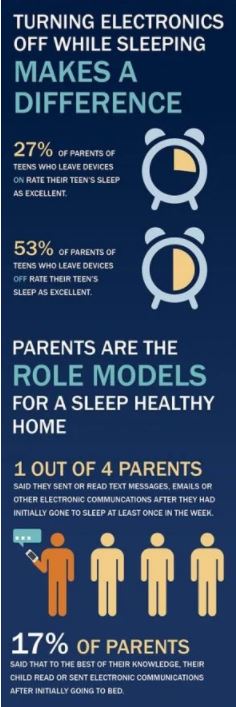
Limiting overall daily screen time can help improve sleep issues, but most importantly, restricting use right before bed can play a key role in helping teens fall asleep faster and improve sleep quality. Consider setting a digital curfew one to two hours before bedtime (the earlier, the better). Create a sleep-positive bedroom environment by encouraging teens to read before bed rather than texting to wind down. Some parents institute a tech-free bedroom policy—no TV, computer, or smart phone allowed in the sleeping space, at least during the night.
There are many benefits to today's tech-driven world: Access to more information, the ability to connect with others in an emergency, and a chance to make friends with new people in new places. Managing the amount of time adolescents spend plugged into their electronic devices helps give them the benefits without as many drawbacks, especially when it comes to sleep.
Article posted by SleepFoundation.org

Privacy Policy / DMCA Notice / ADA Accessibility


